
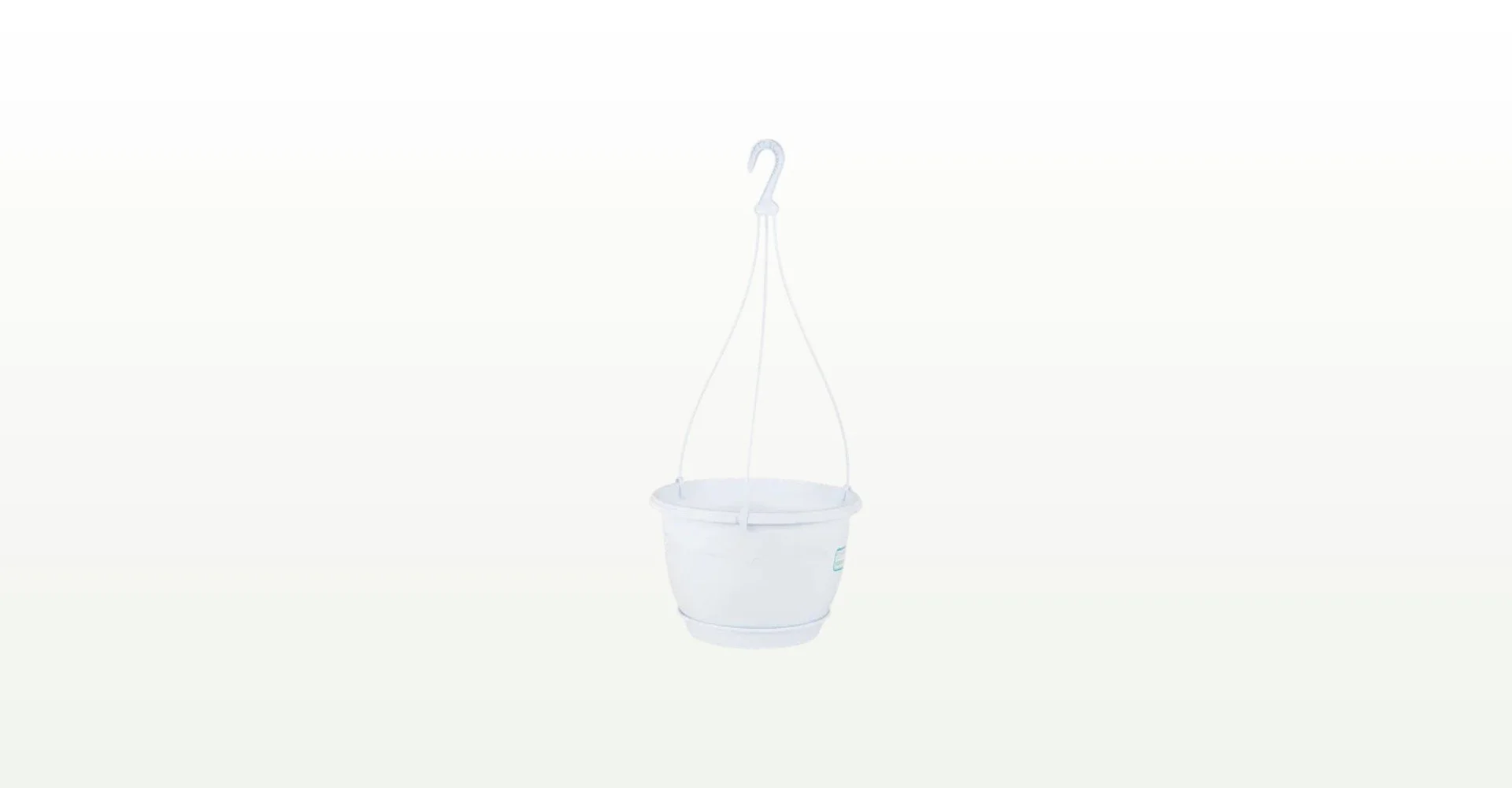
A hanging planter adds green space to narrow balconies without taking up floor area. But if chosen wrongly, watering becomes a problem and a safety risk arises.
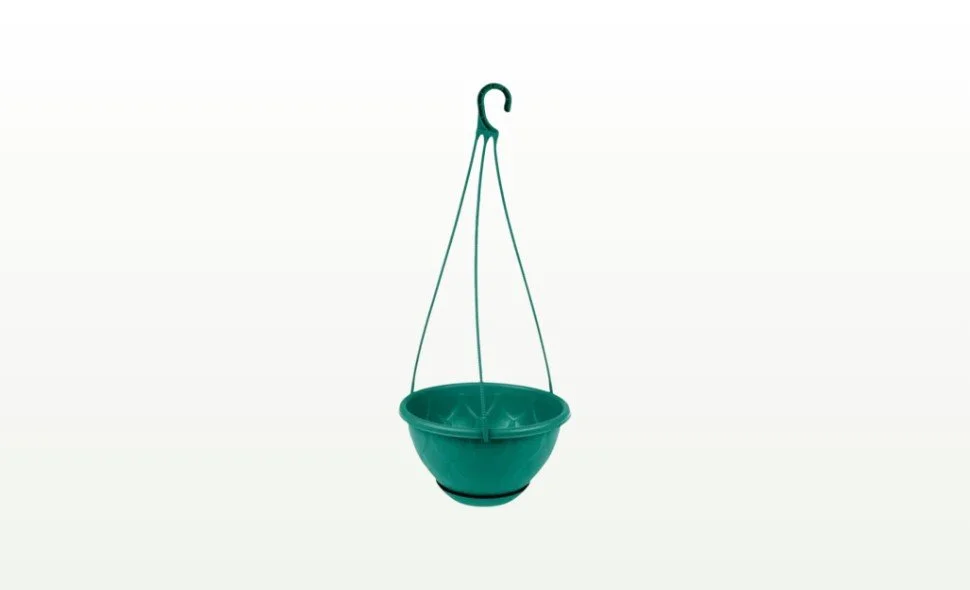
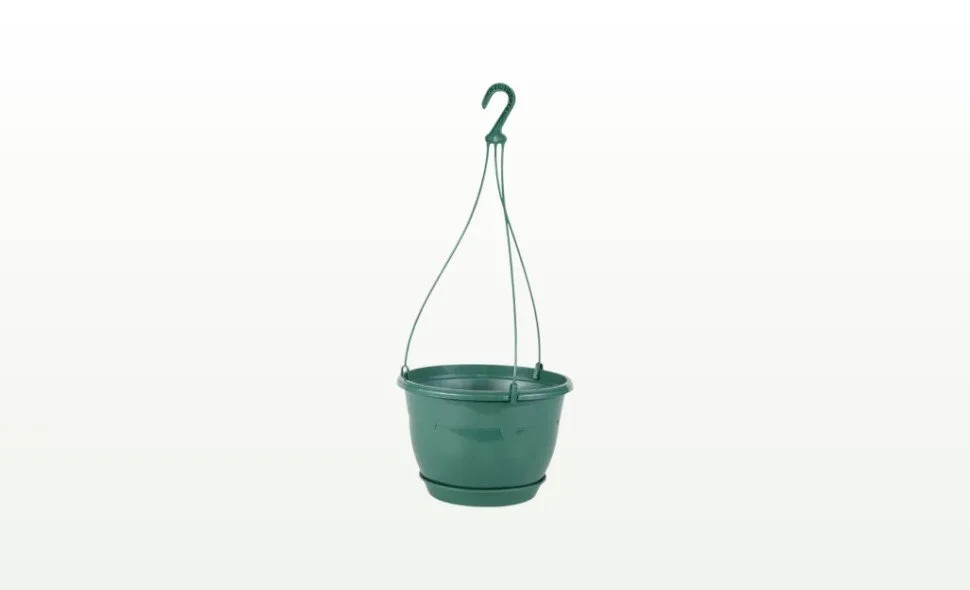

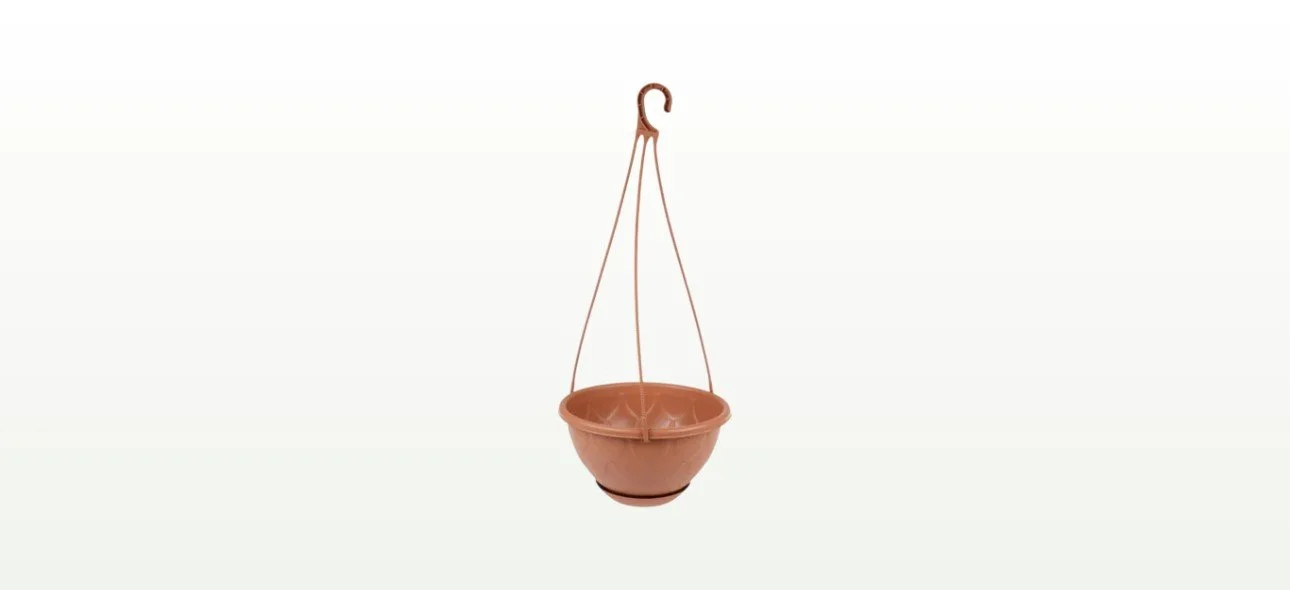
The empty weight of a hanging planter is misleading. After watering, it weighs about twice the soil volume: a 6-liter hanging planter can reach 7–8 kg when watered. Choose the hanging point (anchor, wrought-iron bracket, ceiling hook) accordingly; do not hang it directly from a drywall ceiling.
There are two types. Macramé hanging planters hang from a cord/hanger system and have a strong decorative effect: the Sapphire Macramé and Drop Macramé series are in this group. Self-hanging models sit on the railing and do not sway in the wind; the Chubby series works this way.
A hanging planter gets air from every side, so it dries out faster than a planter on the floor. In summer, you need to check every other day. Models with a bottom saucer prevent dripping; for models without a saucer, the cleanest way is to take the planter down to water it.
On windy balconies, broad-leaved plants act like a sail; prefer narrow-leaved species with flexible branches.
A hanging planter sits above eye level, so its color draws more attention than planters on the floor. Create contrast with the wall color, and if you are using several hangers at the same height, stagger the levels. You can explore all of our hanging models with their size tables.